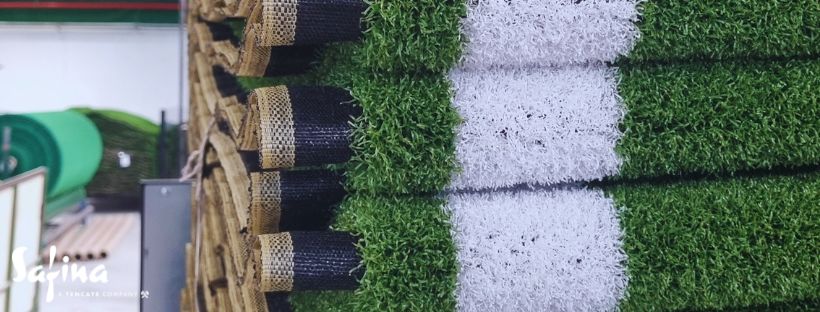

Sustainable Cities and the Role of Artificial Turf
Sustainability is no longer a trend in urban development. It is a requirement.
Cities and developers are under growing pressure to create outdoor spaces that are functional, resilient, and environmentally responsible, while also managing costs and long-term maintenance.
In this context, artificial turf has evolved into a strategic solution. Far from the early perceptions of synthetic grass, today’s systems are engineered with sustainability, efficiency, and lifecycle performance in mind.
For urban planners and developers looking ahead to 2026, understanding this evolution is essential.
Water Savings: A Critical Advantage for Modern Cities
Water scarcity is one of the most pressing challenges facing urban environments. Maintaining natural grass in public spaces, sports fields, and landscaped areas requires significant and continuous irrigation.
Artificial turf eliminates this dependency.
By replacing natural grass with high-quality synthetic surfaces, cities can drastically reduce water consumption, freeing resources for essential uses and supporting broader sustainability goals. This is particularly relevant in regions facing drought conditions or strict water management regulations.
For municipalities, the impact is both environmental and economic:
less water use means lower operational costs and a smaller ecological footprint.
Low Maintenance, Long-Term Efficiency
Sustainable urban design is not only about materials — it is also about how spaces are managed over time.
Natural grass requires mowing, fertilising, pest control, re-seeding, and frequent repairs. Each of these activities involves energy, chemicals, labour, and ongoing disruption to public use.
Artificial turf significantly reduces these demands.
Modern systems are designed for durability and intensive use, maintaining a consistent appearance without the need for chemical treatments or regular intervention. This translates into:
- reduced emissions linked to maintenance equipment
- lower use of fertilisers and pesticides
- fewer disruptions to public spaces
- predictable long-term maintenance costs
For developers and city managers, this efficiency supports both sustainability targets and budget planning.
Material Innovation: Smarter Surfaces for a Changing World
One of the most important developments in artificial turf over recent years has been innovation at the material level.
Advances in yarn technology, backing systems, and manufacturing processes have led to:
- longer product lifespans
- improved resistance to UV exposure and weather conditions
- better performance under heavy foot traffic
- enhanced comfort and safety for users
At Safina, material selection and production know-how play a central role in delivering surfaces that perform consistently while meeting modern environmental expectations.
Innovation is not only about performance — it is about creating solutions that last longer, reduce waste, and offer better value over their entire lifecycle.
Recyclability and End-of-Life Responsibility
Sustainability does not stop at installation. Responsible cities and developers must consider what happens at the end of a product’s life.
The artificial turf industry is increasingly focused on recyclability and circular economy principles. Modern systems are being designed with materials that can be separated, recovered, and reused, reducing landfill impact and supporting more responsible disposal practices.
End-of-life planning is becoming a key decision factor for public tenders and large-scale developments. Choosing partners who take this responsibility seriously is essential for future-proof projects.
Supporting Sustainable Urban Design
Artificial turf is now a recognised tool in sustainable urban planning. Its versatility allows it to be used across a wide range of applications:
- public parks and green corridors
- playgrounds and school yards
- sports facilities and multi-use fields
- rooftop gardens and commercial spaces
- high-traffic pedestrian areas
By providing green, usable spaces that remain functional year-round, artificial turf supports healthier, more inclusive cities. It enables designers to integrate greenery into areas where natural grass would struggle to survive, without compromising sustainability objectives.
Safina’s Role in a More Sustainable Future
As part of the TenCate Group, Safina combines industrial expertise, technological innovation, and a strong commitment to responsible manufacturing.
Our approach focuses on:
- efficient production processes
- durable, high-performance materials
- reduced maintenance requirements
- long-term value for cities and developers
Sustainability is not a single feature — it is the result of informed design choices, responsible production, and a clear understanding of how surfaces perform over time.
Looking Ahead to 2026
For cities and developers planning the next generation of urban spaces, artificial turf represents more than a surface solution. It is a strategic choice that supports water conservation, operational efficiency, and resilient design.
As sustainability standards continue to evolve, informed decisions today will shape the cities of tomorrow.
Design responsibly. Build efficiently. Think long term.